High-definition video camera inspections, tree root intrusion removal, and structural trenchless lateral repairs across Ozone Park, Queens. When waste backs up into basement drains or legacy clay sewer pipes fracture beneath sidewalks, our licensed technicians pinpoint defects accurately and restore vital drainage flow.
Underneath the tree-lined streets of Ozone Park lies an aging subsurface sewer network. While newer municipal trunk lines run beneath Cross Bay Boulevard, many private house connection lines serving local homes date back over 70 to 90 years. Originally constructed from heavy cast-iron under the basement slab and transitioning to vitreous clay pipe outside the foundation wall, these lines are vulnerable to ground shifting, bellies, and invasive tree roots.
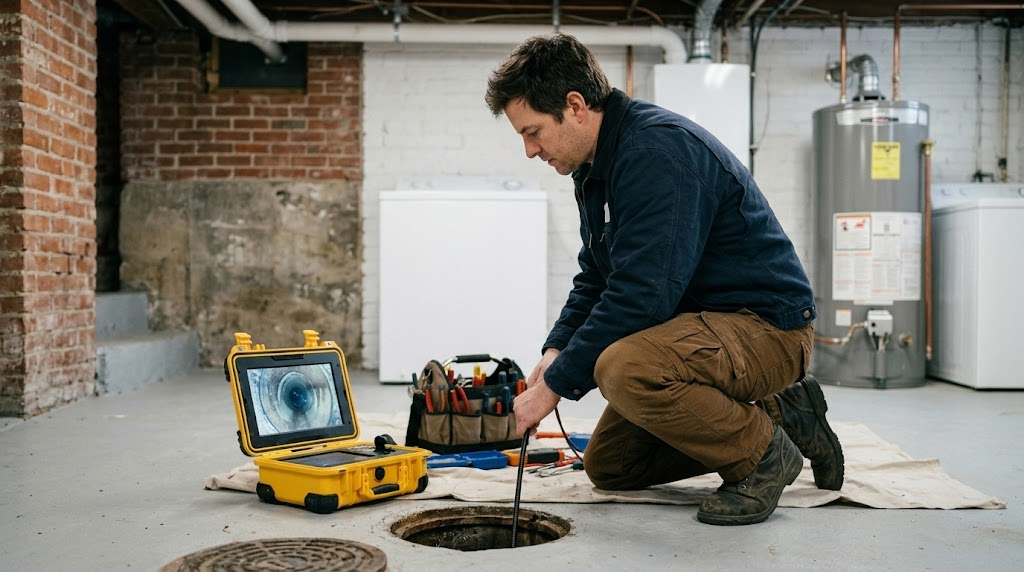
When property owners encounter recurring clogs, a certified sewer camera inspection Ozone Park Queens is the most critical first step. Rather than repeatedly snaking blindly, an optical camera crawler reveals the exact physical condition of the pipe wall, locating crushed sections, misaligned joints, and thick root intrusions without excavation.
When a severe sewer backup repair Ozone Park Queens occurs, our technicians act swiftly to extract sewage, clear blockages, and assess whether a localized spot repair or complete lateral replacement is required. For internal drain line clogs, explore our specialized drain cleaning services or review basement groundwater solutions via our sump pump & flood protection systems.
Sewage backing up through basement floor traps or toilets? Call our dispatch desk immediately to arrange an emergency video camera evaluation.
Understanding the subsurface factors that compromise private sewer lateral piping in Southern Queens.
Mature street maples and oaks send microscopic hair roots through deteriorated clay pipe joints seeking moisture. Once inside, roots blossom into dense fibrous mats that trap toilet paper and solid waste, causing complete flow blockages.
Soil shifting, high water tables, or poor trench compaction allow horizontal pipe sections to sag. This forms a permanent low-point dip—or "belly"—where standing wastewater pools and heavy sludge continually accumulates.
Over 60 to 80 years of contact with corrosive wastewater and harsh household chemicals, cast-iron house drains corrode along the bottom invert, creating jagged channels that snag waste or collapse under foundation slabs.
Vitreous clay sewer sections can shift vertically due to ground compaction and vehicular vibrations from street traffic, creating severe ledge steps where waste collides and backs up toward the home.
Solidified fats, oils, and grease (FOG) combine with heavy mineral scale along pipe walls, gradually constricting a 4-inch sewer line down to a tiny 1-inch bottleneck that easily clogs during laundry cycles.
During torrential downpours, municipal combined sewers beneath Queens streets can become completely inundated, forcing wastewater backward into low-lying basement floor drains without backwater protection.
When sewer line defects are uncovered, property owners must evaluate the most durable and cost-effective remediation strategy:
Targeted Spot Repairs: If an optical camera inspection confirms that 85% of your sewer lateral is structurally sound and the failure is restricted to a single broken hub or localized tree root intrusion under the front lawn, an open-cut spot repair or trenchless sectional point patch can resolve the problem quickly without full line disturbance.
Complete Sewer Replacement: If the pipe has multiple belly sags, widespread bottom channeling, or extensive fractures across both property and sidewalk bounds, continuous piecemeal repairs become a financial drain. Installing a modern, continuous extra-heavy cast-iron or approved schedule 40 line provides a permanent, root-proof sewer connection backed by NYC DEP permits.
Homeowners in New York City own the entire sewer connection from the house out to the city sewer main under the street. If a collapse occurs beneath the public sidewalk or roadway, the homeowner is legally responsible for securing licensed utility permits and completing repairs.
Essential insights into diagnostic procedures, property responsibilities, and permanent repair solutions.
A self-leveling, waterproof fiber-optic color camera equipped with a built-in 512Hz sonde transmitter is inserted through your basement cleanout into the main building drain. As it navigates through your private lateral to the city sewer main under the street, it transmits live high-definition footage revealing tree root penetrations, cracked clay hubs, pipe bellies (sags), offset joints, and interior scale accumulation.
Under NYC Department of Environmental Protection (DEP) regulations, property owners are solely responsible for maintaining and repairing the entire length of their private sewer lateral pipe—from inside the building foundation all the way out to its physical spur connection at the city sewer main in the middle of the street.
Frequent sewage backups through basement floor drains, slow drainage across multiple fixtures simultaneously, gurgling sounds from first-floor toilets when a washing machine discharges, persistent sewer gas odors in the cellar, or unexplained lush green patches or ground depressions in front lawns.
Mechanical cabling with root-cutter blades provides immediate temporary relief by chopping away intrusive root masses. However, roots enter through fractured hubs or degraded clay joints seeking moisture; as long as the structural opening remains unsealed, roots will vigorously re-grow within 6 to 12 months. Structural spot repairs or epoxy pipe lining provide permanent solutions.
Call (315) 202-8009 to diagnose sewer backups and underground lateral defects with pinpoint precision.