Fast diagnostic troubleshooting and repair for gas, electric, and boiler-coupled indirect domestic hot water heaters throughout Ozone Park, Queens. When you face an unexpected ice-cold shower or discover water pooling in your basement utility room, our technicians arrive equipped to restore consistent domestic hot water safely.
Domestic hot water is essential to everyday sanitation, cooking, and household comfort. Across Ozone Park, water heating configurations vary depending on home size and boiler architecture. Many properties utilize standalone atmospheric natural gas water heaters with metal draft hoods vented into chimneys. Others feature electric storage tanks, modern tankless units, or indirect hot water tanks piped as a dedicated zone to the central heating boiler.
When homeowners experience a sudden no hot water repair Ozone Park Queens crisis, prompt diagnosis is critical. Our technicians specialize in diagnosing complex hot water heater repair Ozone Park Queens issues—including failing thermocouples, blocked burner orifices, faulty 24V Honeywell gas control valves, and burned-out electric heating elements.
If you notice your water heater leaking Ozone Park Queens, early intervention can prevent catastrophic tank ruptures and basement flood damage. Whether you require standard gas water heater repair Ozone Park Queens, specialized electric water heater repair Ozone Park Queens, or need to assess connected gas lines via our gas line repair & inspection technicians, we deliver honest evaluations. For comprehensive boiler support, visit our boiler repair in Ozone Park homepage.
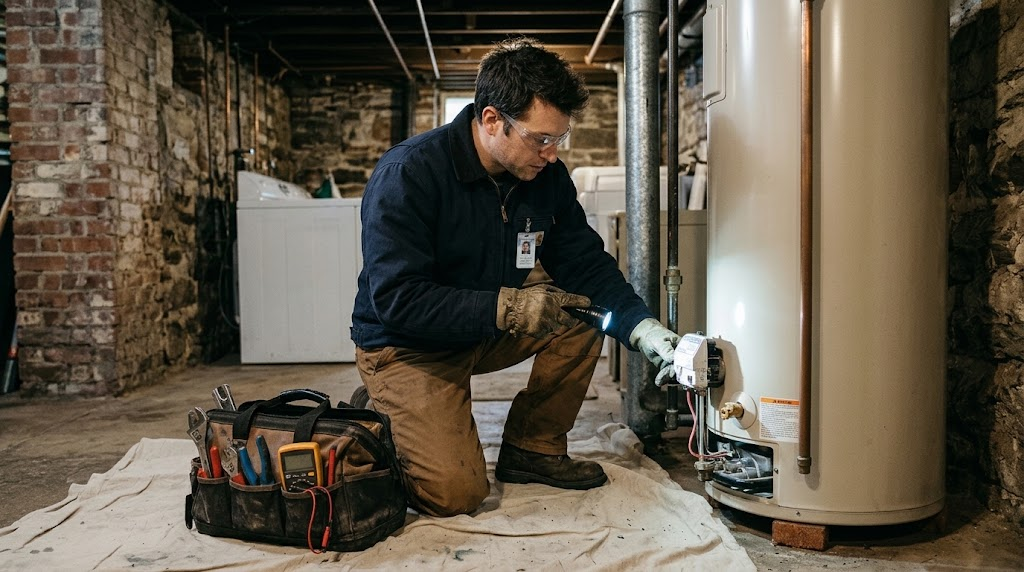
Experiencing lukewarm water, leaking valves, or a pilot light that will not stay lit? Speak directly with our dispatch desk to arrange diagnostic evaluation.
Identifying the root mechanical cause behind water heater failures in Queens residential properties.
When you release the pilot button and the flame instantly extinguishes, the thermocouple or thermopile is oxidized, defective, or misaligned with the flame tip, cutting off the safety millivolt signal to the gas valve.
If the T&P relief valve is discharging water continuously, either internal tank temperatures are dangerously high, municipal water supply pressures exceed 80 PSI without an expansion tank, or the valve spring has worn out.
If hot water runs out after just three minutes of showering, the plastic dip tube inside the cold water inlet has fractured, dumping cold municipal water directly at the top outlet rather than directing it to the bottom burner.
In electric water heaters, upper and lower immersion heating elements can short out or burn out due to mineral scale accumulation, leaving homeowners with lukewarm or completely cold water.
Rusty, discolored hot water or a foul sulfur smell signals that the internal sacrificial magnesium anode rod has fully dissolved, allowing corrosive minerals to attack the steel tank lining directly.
Rumbling, boiling noises indicate a thick layer of hardened mineral sediment blankets the bottom of the tank, causing burner flames to overheat the steel base and dramatically reducing heating efficiency.
Water heaters have an average expected service lifespan of 8 to 12 years. Deciding whether to repair or replace depends on tank age, structural integrity, and the cost of parts:
When Repair Is Feasible: If your tank is under 8 years old and shows zero signs of external rust or moisture around the steel base, replacing inexpensive serviceable components—such as the thermocouple, gas control valve, thermal high-limit switch, heating element, or relief valve—is fully economical and will restore years of dependable performance.
When Replacement Is Unavoidable: If water is seeping from the tank shell, rusting through seams, or if the tank is older than 10 to 12 years with severe interior scaling, replacement is essential. Attempting to repair a rusted tank is impossible, and continuing to operate it poses high risks of sudden ruptures that flood finished basements.
Practical answers addressing water heater malfunctions and maintenance in Queens.
In atmospheric gas water heaters, a sudden loss of hot water is most commonly caused by an extinguished standing pilot light, a defective thermocouple failing to signal gas flow, or a tripped high-limit thermal switch. For electric units, tripped circuit breakers, failed upper heating elements, or defective thermostats cut off heat generation completely.
If water is actively leaking from the steel tank cylinder itself (typically seeping from underneath the bottom jacket or around insulation), it cannot be safely repaired or welded. The internal glass lining has breached and the structural steel has rusted through, requiring complete tank replacement. However, leaks from external fittings, drain valves, or the temperature and pressure relief valve can be easily repaired.
An indirect water heater is a highly insulated storage tank containing an internal heat exchanger coil connected as an independent heating zone to your central boiler. Rather than firing its own gas burner, hot boiler water circulates through the coil to heat domestic water with exceptional recovery rates and thermal efficiency.
Popping and rumbling sounds are caused by heavy mineral sediment accumulated on the bottom of the tank. As the burner heats the tank floor, trapped water pockets underneath the sediment boil, steam, and bubble violently through the sediment blanket. Flushing the tank helps restore quieter operation.
Call (315) 202-8009 to speak with an experienced Queens water heating technician.